As the political landscape intensifies with the approaching elections, the Pakistan Tehreek-e-Insaf (PTI) led by Imran Khan has witnessed a noticeable surge in the departure of prominent party members.
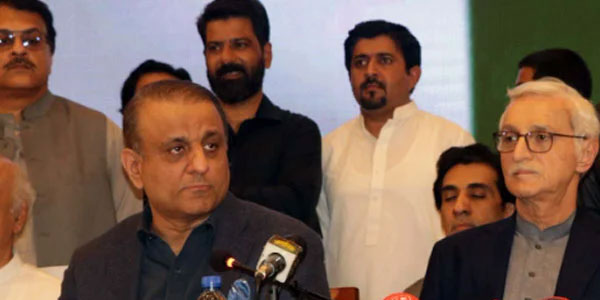
Recently, Wajiha Qamar, a PTI lawmaker, announced her departure from the party, opting to join the Pakistan Muslim League-Nawaz (PML-N). This development follows the trend set earlier in the week, with several other PTI leaders severing ties with the party to join the Istehkam-e-Pakistan Party (IPP) of Jahangir Khan Tareen, a former close aide to Khan.
Among the recent departures, three prominent female PTI politicians, Andleeb Abbas, Sadia Sohail, and Sumaira Bokhari, announced their alignment with Tareen’s party during a meeting with him.
Qamar, in formally announcing her decision to join the PML-N, expressed her admiration for the party’s leadership, including Nawaz Sharif and Shehbaz Sharif, emphasizing her trust in their leadership and the party’s vision. Acknowledging the historical role played by Nawaz Sharif and the PML-N in Pakistan’s development and progress, she implicitly criticized the “destructive force” that, without naming, she accused of causing harm to the country and its people. Encouraging support for the “force of construction,” she highlighted the need for a positive political direction for the country.
The exodus of PTI leaders gained momentum following the May 9 riots, triggered by the arrest of PTI Chairman Imran Khan in a corruption case. The protests, which resulted in the targeting of several state installations, led to a crackdown on those involved, including the arrest of numerous party workers and leaders, including Vice Chairman Shah Mahmood Qureshi.
Subsequently, a significant number of PTI leaders departed the party, with some joining the IPP, while others aligned themselves with different political parties such as the PPP and PML-N. Among the notable figures who parted ways with the PTI, Fawad Chaudhry, Ali Zaidi, Imran Ismail, Fayazul Hassan Chohan, and Murad Raas have all joined the IPP, reshaping the political landscape in the lead-up to the impending elections.