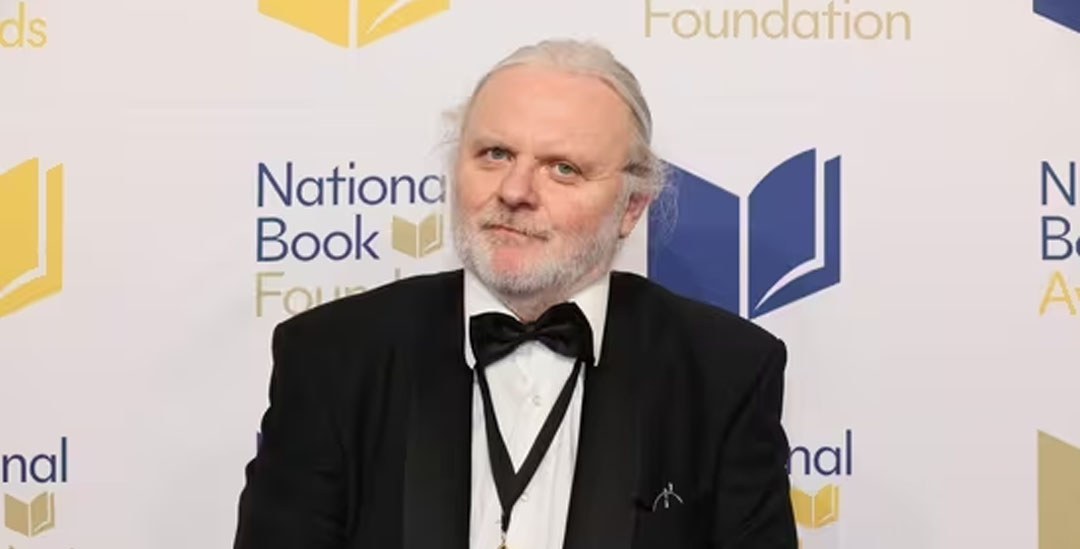
Norwegian playwright Jon Fosse, renowned for his minimalist and innovative approach to theater and literature, has been honored with the Nobel Prize in literature. Fosse’s plays are celebrated for their simplicity, using language, rhythm, melody, and silence to convey profound messages.
The Swedish Academy recognized the 64-year-old Fosse “for his innovative plays and prose which give voice to the unsayable.” Fosse’s writing is characterized by its form, often leaving what is unsaid more impactful than what is expressed.
In response to receiving the Nobel Prize, Fosse expressed his gratitude, saying, “I am overwhelmed and grateful. I see this as an award to the literature that first and foremost aims to be literature, without other considerations.”
Fosse, whose works include plays, novels, poetry collections, essays, children’s books, and translations, has become one of the most widely performed playwrights in the world. His major works, such as “Boathouse” (1989) and “Melancholy” I and II (1995-1996), have received critical acclaim.
Born in western Norway, Fosse rebelled against his strict Lutheran upbringing by embracing atheism and playing in a band. He later converted to Catholicism in 2013. His literary career began with the novel “Red, Black” in 1983, characterized by its non-linear narrative.
Fosse’s latest magnum opus, “Septology,” is a semi-autobiographical work spanning three volumes, totaling 1,250 pages without a single full stop. The third volume was shortlisted for the 2022 International Booker Prize.
Fosse’s breakthrough as a playwright came with “Someone is Going to Come,” staged in Paris in 1999. This marked the beginning of his international acclaim, with subsequent works like “And We’ll Never be Parted” (1994) earning widespread recognition.
His plays have been performed over a thousand times worldwide and translated into approximately 50 languages. Fosse’s writing transcends traditional character-focused narratives, delving into the essence of humanity.
The Nobel Prize in Literature awarded to Jon Fosse highlights his exceptional contribution to the world of theater and literature. Fosse’s unique style and ability to evoke deep emotions through minimalistic storytelling have earned him a well-deserved place among the world’s literary giants.
The Swedish Academy, criticized in the past for its selection of predominantly Western white male authors, has been undergoing reforms to promote a more diverse and gender-balanced literature prize. Jon Fosse joins the ranks of recent Nobel laureates who reflect this commitment to recognizing a wider array of voices in literature.