Yury Borisov, the chairman of Russia’s space agency Roscosmos, has disclosed that the crash of Russia’s Luna-25 autonomous interplanetary station into the moon’s surface last month was attributed to the failure of the speed-measuring equipment on the mission.
During a press conference, Borisov explained that the probe’s landing procedure resulted in the mishap because “the correction engine didn’t stop working based on the data from the accelerometer.”
He further elaborated that the vehicle’s accelerometers, responsible for tracking changes in speed, failed to activate as intended.
According to Borisov, experts are currently investigating the root causes behind the malfunction of these crucial components, with 11 out of the 16 potential outcomes for their failure already examined.
In addition, Borisov revealed that Bill Nelson, the head of NASA, was the first to offer words of encouragement following the unfortunate incident, as reported by RT.
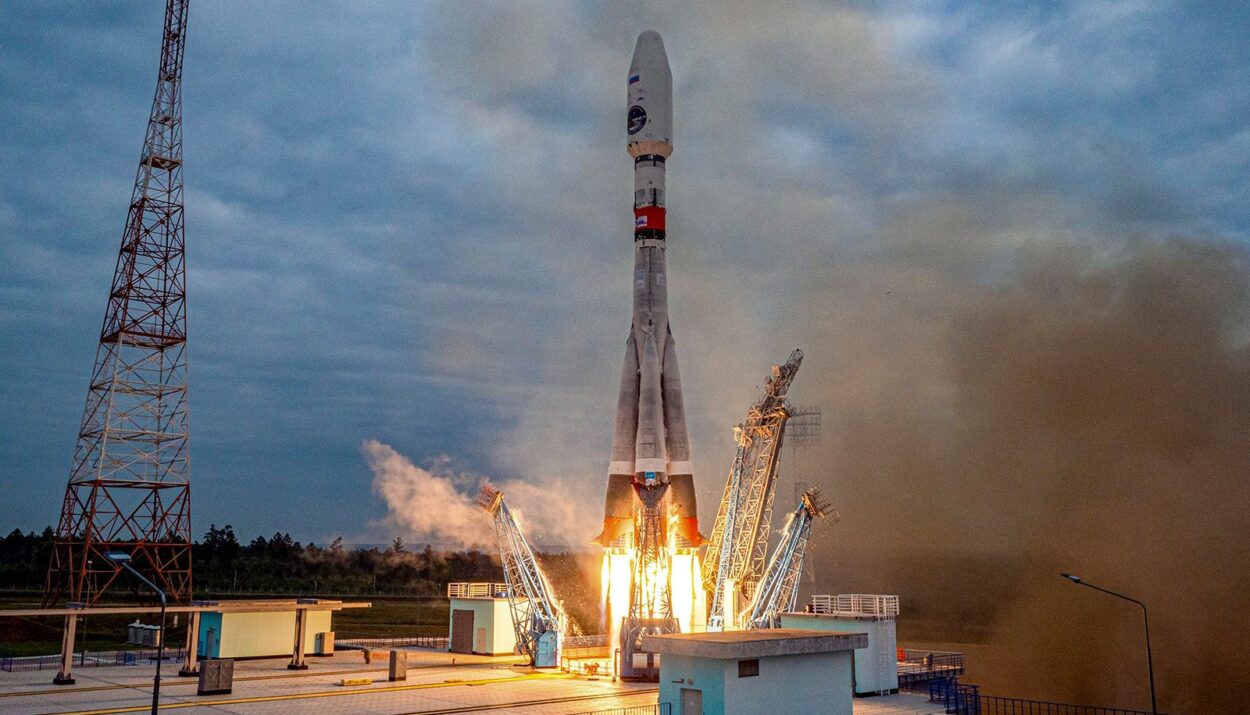
Luna-25, the first Russian lunar probe since the end of the Soviet Union, was launched on August 11 via a Soyuz 2.1b rocket from the Vostochny Cosmodrome in Russia’s Far East. While the spacecraft had successfully entered lunar orbit, the landing attempt on August 19 ended in failure.
Following the crash, Luna-25 “switched to a non-designated orbit and ceased to exist due to a collision with the moon’s surface,” as per Roscosmos.
A few days after the collision, Borisov shared that the probe’s engine failed to shut down properly, running for 127 seconds instead of the expected 84 seconds. He emphasized that the organization will meticulously analyze the errors from this mission to ensure the success of future missions, including Luna-26, 27, and 28.