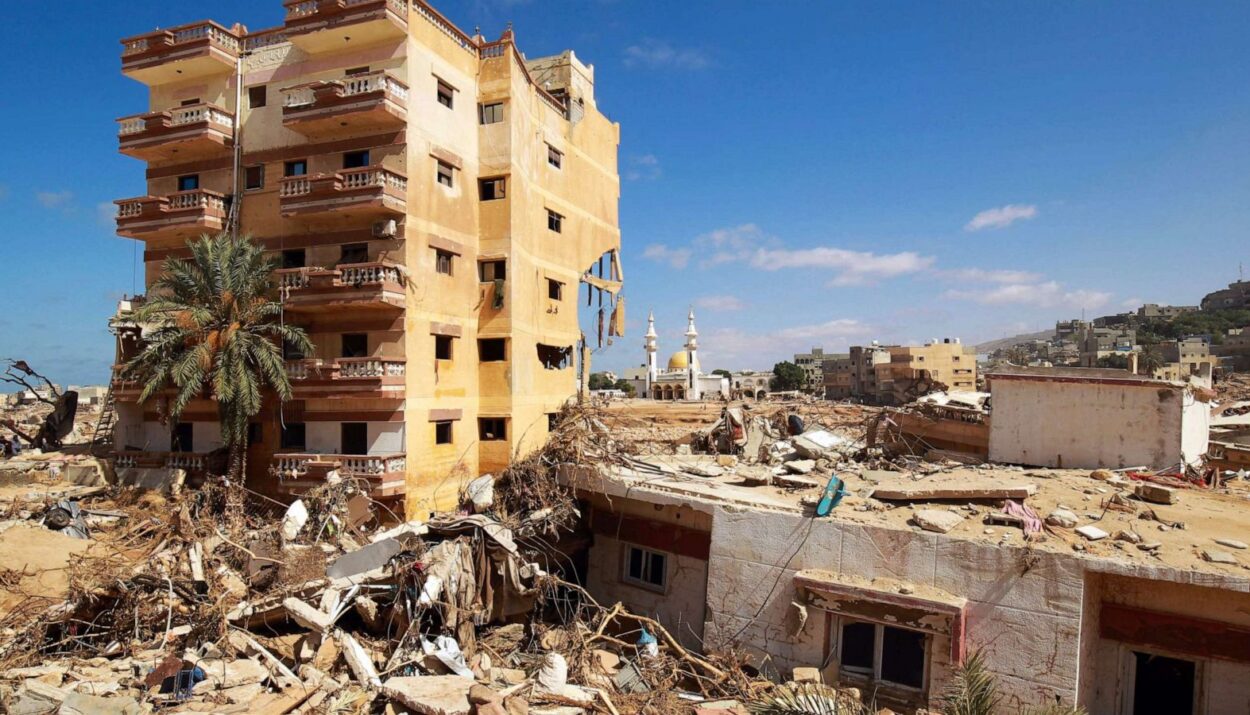
A week after a devastating flood swept through Libya’s coastal city of Derna, leaving thousands dead, efforts have shifted towards caring for survivors of this catastrophic event. Estimates of the number of lives lost vary significantly.
According to the most recent official death toll from the health minister of the eastern-based administration, Othman Abdeljalil, the number stands at 3,166 people killed. However, a United Nations report released on Sunday reveals a much higher toll, indicating that the death toll from Derna alone has reached a staggering 11,300. The UN Office for the Coordination of Humanitarian Affairs (OCHA), citing the Libyan Red Crescent, also reports that an additional 10,100 people remain missing in the devastated city.
The OCHA report emphasizes that these figures are expected to increase in the coming days and weeks as search-and-rescue teams continue their efforts to locate survivors.
Aid is now pouring into the North African country as the international community rallies to support emergency services in coping with the aftermath of this deadly flood. Over 40,000 people have been displaced across northeastern Libya, as reported by the International Organization for Migration. However, the actual number is likely higher, given the challenges in accessing the worst-affected areas.
The catastrophe unfolded when two dams upstream from Derna burst a week ago under the pressure of torrential rains brought by the hurricane-strength Storm Daniel. These dams had been constructed to protect the port city of 100,000 people following significant flooding in the mid-20th century. The densely built-up banks of a dried riverbed or wadi running through the city center bore the brunt of the rushing waters as they surged toward the Mediterranean.
Even a week later, bodies are still being discovered. A rescue team from Malta’s Civil Protection Department found a beach strewn with corpses on Friday.
International aid from the United Nations, Europe, and the Middle East is now arriving to offer relief to the thousands of survivors. This aid includes vital medicines, emergency surgical supplies, and body bags to facilitate the respectful handling of the deceased. Additionally, tents, blankets, carpets, hygiene kits, and food have been airlifted, along with heavy machinery to assist in clearing the debris.