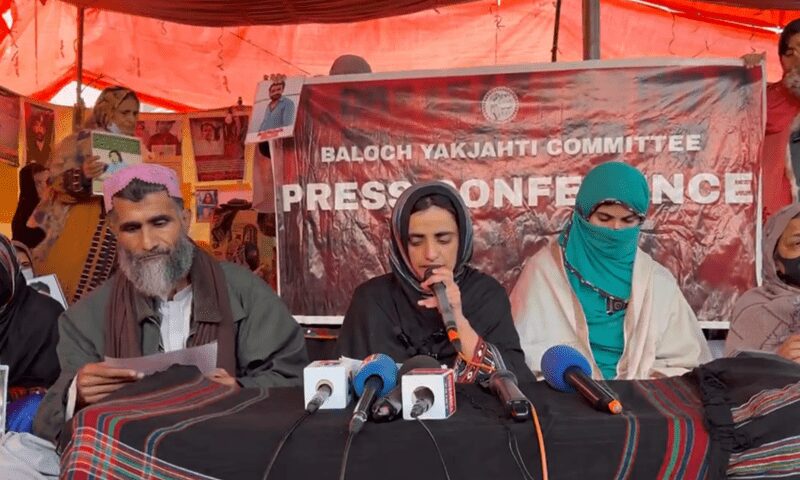
Activist Dr Mahrang Baloch strongly criticized the imposition of Section 144 in Quetta, denouncing it as an infringement on the right to peaceful assembly. She expressed concern about potential repercussions for peaceful protesters and families of missing persons and called for accountability from key government figures.
During a month-long protest sit-in in Islamabad, participants of the Turbat long march, led by Dr Baloch, arrived in Quetta with plans for a rally in the provincial capital. The march originated in Turbat following the alleged extrajudicial killing of Balaach Mola Bakhsh, demanding the registration of an FIR against the involved officials.
The protesters, advocating against enforced disappearances, staged a sit-in in Islamabad, calling for a judicial commission to investigate missing persons’ killings. After announcing the conclusion of the sit-in, they moved to Quetta.
In response to these events, Dr Mahrang accused the Balochistan government of imposing Section 144 to curb their “peaceful movement against human rights abuses, extrajudicial killings, and enforced disappearances.”
The provincial government justified the imposition, citing security threats and a recent foiled terrorist attack by the Counter-Terrorism Department (CTD) police in Quetta. Jan Achakzai, Balochistan’s caretaker information minister, stressed that public safety prompted the decision.
Dr Mahrang, however, contends that Section 144 was a deliberate attempt to disrupt the “peaceful gathering” of protesters, challenging the government’s stance on maintaining public safety.