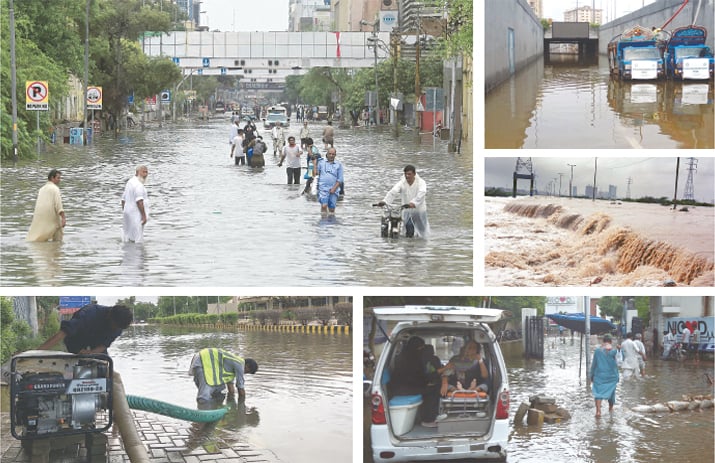
Karachi experienced a second day of relentless heavy downpours on Sunday, leaving many parts of the city submerged in rainwater. Areas such as North Karachi, Superhighway, Bufferzone, and others witnessed heavy to moderate rains, causing significant challenges for residents.
The Met Office reported a humidity level of 92% in the metropolis, and major arteries, including Qayyumabad Chowrangi and II Chundrigar Road, remained clogged with stagnant rainwater. Commuters were forced to take longer routes to reach their destinations.
Despite rainwater being drained from certain areas, including Safoora Chowrangi and Gurumandir, persistent nimbus clouds in central and northern areas indicated intermittent rains expected to continue throughout the day.
The Pakistan Meteorological Department (PMD) forecasted cloudy weather and intermittent rain for various parts of Karachi, with temperatures at 19.9°C and winds at 8km/h from the northeast. Power outages plagued several areas, including Gulistan-e-Johar and Jamshed Road, since Saturday night.
Numerous localities, such as Baldi Town, Gulshan-e-Maymar, DHA, and others, faced prolonged power outages and flooding. Sharea Faisal, one of the city’s main arteries, witnessed severe waterlogging, causing traffic disruptions on Saturday night.
Unfortunately, the city administration appeared unprepared for the heavy rainfall, as emergency responses were lacking. The Gizri underpass and District Central’s Nagan Chowrangi were flooded, contributing to commuter chaos and property damage.
In District East, the under-construction University Road became impassable due to flooding, leaving many stranded for hours. The situation prompted public frustration as the rainwater even entered some houses.
Mayor Murtaza Wahab’s office issued a statement acknowledging drainage efforts initiated after the rainfall had subsided in affected areas. However, the lack of proactive measures during the heavy rainfall raises concerns about the city’s preparedness for such weather events.