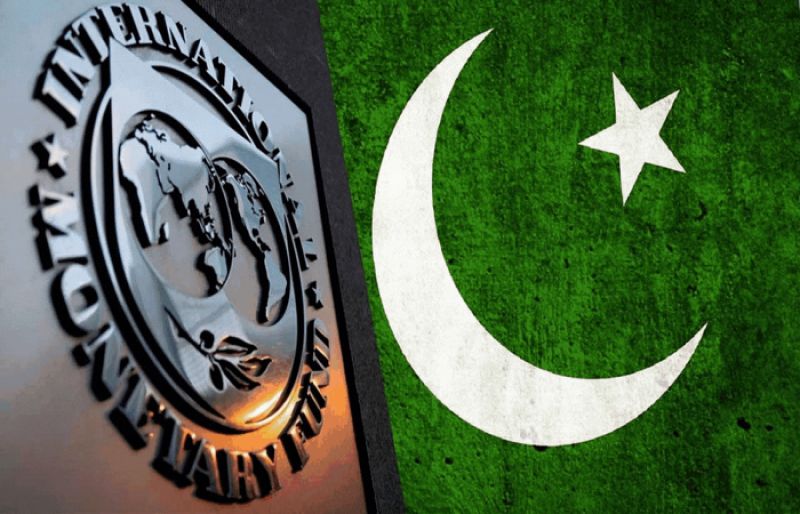
Pakistan is looking to finalize a staff-level agreement on an International Monetary Fund (IMF) bailout exceeding $6 billion this month, after addressing the lender’s requirements in its annual budget, according to Minister of State for Finance, Revenue and Power, Ali Pervaiz Malik.
The Pakistan Muslim League-Nawaz (PML-N)-led coalition government has set challenging revenue targets in its budget to win IMF approval for the loan, essential to stave off another economic meltdown amid rising domestic discontent over new taxation measures.
The government has increased taxes on the already burdened salaried class, incorporated exporters into the normal tax regime, hiked the petroleum levy to Rs70, and imposed new taxes on the real estate sector, among other measures, to boost tax collection.
“We hope to culminate this [IMF] process in the next three to four weeks,” Malik told Reuters, aiming to secure a staff-level agreement before the IMF board recess. “I think it will be north of $6 billion,” he said, though he emphasized that the IMF’s validation is currently the primary focus.
The IMF has not yet responded to a request for comment.
Earlier, Finance Minister Muhammad Aurangzeb expressed optimism about securing a new IMF bailout following President Asif Ali Zardari’s approval of the tax-intensive budget for the upcoming fiscal year starting July 1.
“The IMF programme is our assurance in terms of macro stability. We are taking it forward; it is inevitable. I’m very optimistic that we’ll be able to take it through the finish line for an Extended Fund Programme which is going to be larger and longer in nature,” Aurangzeb said at a press conference in Islamabad.
Malik explained that the tough and unpopular budget is a stepping stone for the IMF programme, adding that the lender is satisfied with the revenue measures based on their discussions. “There are no major issues left to address, now that all major prior actions have been met, the budget being one of them,” he said.
While the budget may win IMF approval, analysts warn it could fuel public anger. “Obviously they [budget reforms] are burdensome for the local economy but the IMF programme is all about stabilization,” Malik noted.
Sakib Sherani, an economist and head of Macro Economic Insights, emphasized the urgency of a quick deal with the IMF to avoid pressure on Pakistan’s foreign exchange reserves and currency, given the country’s maturing debt repayments and the effects of lifting earlier capital and import controls.
“If it takes longer, then the central bank may be forced to temporarily re-instate import and capital controls,” Sherani said. “There will be a period of uncertainty, and one casualty is likely to be the rally in equities.”