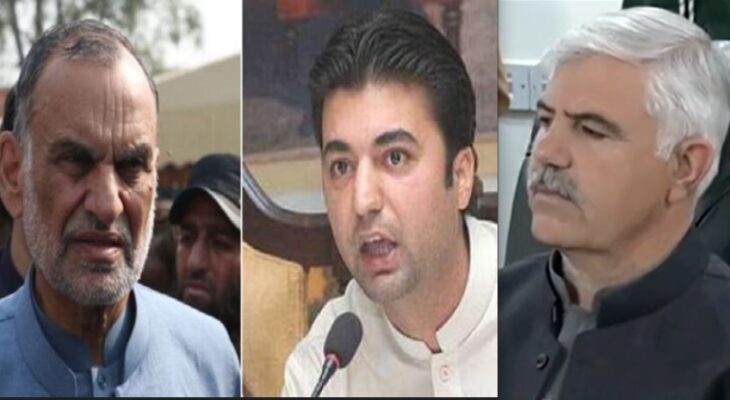
In a significant setback for the Pakistan Tehreek-e-Insaf (PTI), the Election Commission of Pakistan (ECP) on Wednesday rejected the nomination papers of senior PTI leaders Murad Saeed and Azam Swati, who were slated as the party’s nominees from Khyber Pakhtunkhwa on general and technocrat seats, respectively, for the upcoming Senate elections.
Additionally, the ECP also dismissed the nomination papers of Pakistan Tehreek-e-Insaf-Parliamentarians (PTI-P) leader Mahmood Khan, dealing a blow to his bid to secure a position in the upper house.
According to the final list of candidates released by the electoral body, nomination papers for 30 candidates from Khyber Pakhtunkhwa have been approved for the Senate polls, with 16 for general seats, eight for technocrat seats, and six for women’s seats.
This development comes as the ECP prepares to conduct elections for 48 seats of the upper house on April 2, following the expiration of the six-year term of the incumbent senators on March 11.
Members of the assemblies of Balochistan, Khyber Pakhtunkhwa (KP), Sindh, and Punjab will participate in the voting process to elect members against various seats, including general, women, and technocrat seats.
The scrutiny process of nomination papers concluded on March 19, and candidates have until March 21 to file appeals against the acceptance or rejection of nominations, with the tribunal expected to dispose of these appeals by March 25.
The final and revised list of candidates will be published on March 26, followed by the last date for withdrawal of candidature on March 27.
Meanwhile, the Senate elections will take place in Islamabad’s Parliament House and all four provincial assemblies from 9 am to 4 pm.
It’s noteworthy that Murad Saeed is among several PTI leaders who have been “underground,” fearing arrests over their alleged involvement in the May 9 riots, which erupted following the arrest of Imran Khan in a graft case last year, leading to vandalism of military installations across the country.
The ECP also issued its code of conduct for the Senate polls, outlining rules for political parties, candidates, election agents, and voters, including restrictions on soliciting support from public officials and possessing electronic devices during the voting process.
In a significant setback for the Pakistan Tehreek-e-Insaf (PTI), the Election Commission of Pakistan (ECP) on Wednesday rejected the nomination papers of senior PTI leaders Murad Saeed and Azam Swati, who were slated as the party’s nominees from Khyber Pakhtunkhwa on general and technocrat seats, respectively, for the upcoming Senate elections.
Additionally, the ECP also dismissed the nomination papers of Pakistan Tehreek-e-Insaf-Parliamentarians (PTI-P) leader Mahmood Khan, dealing a blow to his bid to secure a position in the upper house.
According to the final list of candidates released by the electoral body, nomination papers for 30 candidates from Khyber Pakhtunkhwa have been approved for the Senate polls, with 16 for general seats, eight for technocrat seats, and six for women’s seats.
This development comes as the ECP prepares to conduct elections for 48 seats of the upper house on April 2, following the expiration of the six-year term of the incumbent senators on March 11.
Members of the assemblies of Balochistan, Khyber Pakhtunkhwa (KP), Sindh, and Punjab will participate in the voting process to elect members against various seats, including general, women, and technocrat seats.
The scrutiny process of nomination papers concluded on March 19, and candidates have until March 21 to file appeals against the acceptance or rejection of nominations, with the tribunal expected to dispose of these appeals by March 25.
The final and revised list of candidates will be published on March 26, followed by the last date for withdrawal of candidature on March 27.
Meanwhile, the Senate elections will take place in Islamabad’s Parliament House and all four provincial assemblies from 9 am to 4 pm.
It’s noteworthy that Murad Saeed is among several PTI leaders who have been “underground,” fearing arrests over their alleged involvement in the May 9 riots, which erupted following the arrest of Imran Khan in a graft case last year, leading to vandalism of military installations across the country.
The ECP also issued its code of conduct for the Senate polls, outlining rules for political parties, candidates, election agents, and voters, including restrictions on soliciting support from public officials and possessing electronic devices during the voting process.