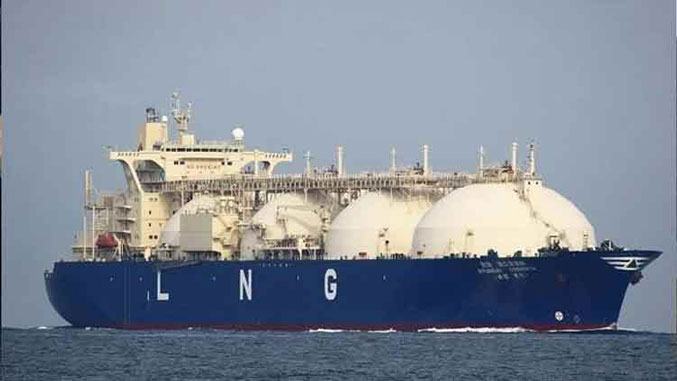
Pakistan has initiated a fresh tender to acquire liquefied natural gas (LNG) spot cargoes in an effort to meet its winter demand, following more than a year of struggles to secure supplies from the global market.
The state-owned Pakistan LNG Limited (PLL) announced its intention on Wednesday, inviting bids from international suppliers for two LNG cargoes, each containing 140,000 cubic meters of LNG, to be delivered in December at Port Qasim in Karachi.
According to the tender document, the specified delivery windows are December 7-8 and December 13-14. PLL has been mandated to procure LNG on behalf of the federal government to address the country’s gas requirements through two LNG import terminals with exclusive arrangements for public sector distribution.
Securing deliveries from the volatile spot LNG market has proven to be a significant challenge for Pakistan, dating back to the start of the Ukraine-Russia war in February 2022. Previous attempts to purchase LNG faced obstacles, primarily due to the lukewarm response of sellers and concerns about Pakistan’s credit risk.
LNG is of vital importance to Pakistan, where natural gas accounts for over a third of power generation, and local gas reserves are inadequate to meet the growing electricity demand in a country with a population of over 230 million.
In late July of this year, PLL’s efforts to procure LNG were unsuccessful, as bidding companies offered winter LNG cargoes at a premium of as high as 30% above market prices, making the purchases prohibitively expensive.
Responding to queries raised by The News, Energy Minister Muhammad Ali revealed that natural gas supply in the system had declined by 20% compared to the previous year. This significant gap is expected to result in reduced gas availability for end consumers, potentially leading to load shedding.
In an attempt to bridge this gap, the government is pursuing LNG imports, although this option comes at a high cost. Ali stated that they are striving to import as many LNG cargoes as possible to meet industry demand.
When discussing the challenges of LNG import from the spot market, Ali highlighted two main obstacles. First, he noted the peculiar nature of the LNG trade, where purchase contracts are made before the LNG is produced. To address this challenge, he suggested the establishment of long-term buying contracts to ensure smooth gas imports.
Secondly, Ali mentioned the low capacity of Pakistan’s gas import infrastructure as another constraint. The government aims to run existing terminals at full capacity and remove obstacles to setting up additional LNG terminals in the country.
According to a report, Pakistan’s demand for liquefied natural gas is expected to nearly triple in five years due to dwindling domestic gas production. The nation will require 25 LNG cargoes per month by that time, compared to the current nine per month. Pakistan has struggled to secure enough LNG to cover its needs, particularly after prices reached an all-time high last year.