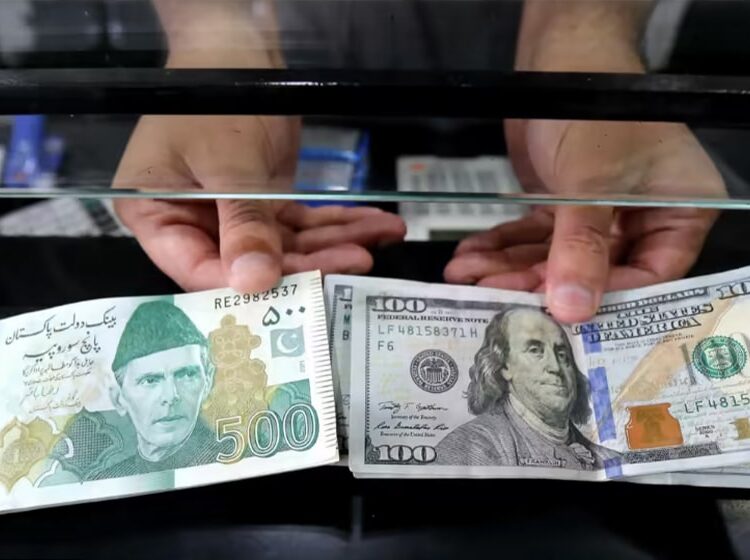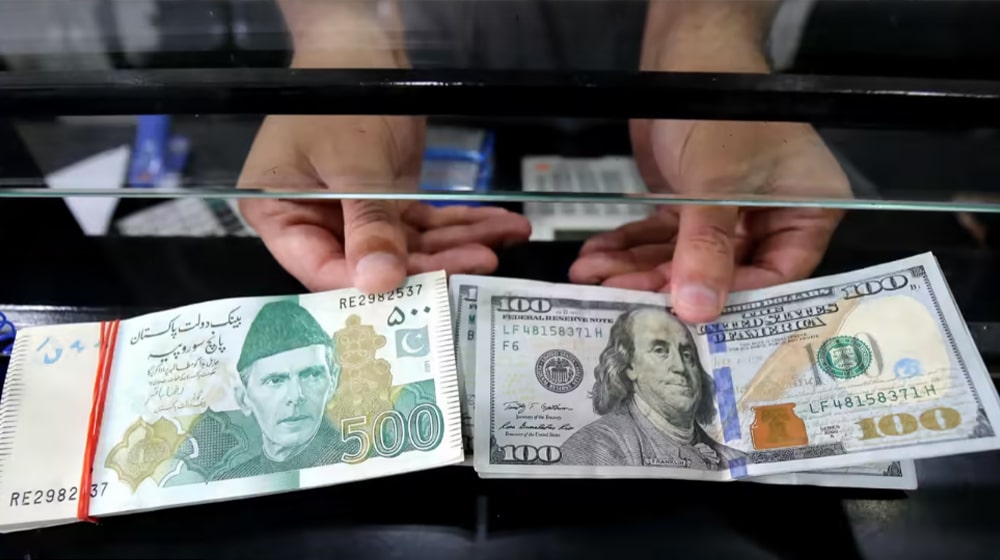
KARACHI: With the markets witnessing a surge in export earnings and remittance inflows following government actions against speculative activities, the Pakistani rupee is expected to maintain its upward trajectory against the US dollar, as reported by The News on Sunday.
The rupee, which closed at 301.16/dollar on Monday, displayed notable strength and concluded the week at 296.85 on Friday.
Over the course of five trading sessions this week, the rupee appreciated against the dollar by 1.43%, equivalent to Rs4.31, mainly due to reduced demand for dollars in the parallel or unofficial market.
In a statement issued on Saturday, Tresmark, a financial technology company, noted, “Liquidity in the forex market has improved significantly as exporters have actively engaged in both spot and forward transactions with substantial volumes. Additionally, the daily remittances have seen an uptick, contributing to the gradual strengthening of the rupee.”

The current account deficit, a key indicator measuring the gap between foreign exchange inflows and outflows, showed an impressive 79% month-on-month reduction to $160 million in August. This improvement was witnessed across all four segments: trade, services, primary, and secondary income.
The regulatory measures implemented to curb illegal activities in the foreign exchange market have begun to yield positive results. This has led to a convergence between the interbank and open market exchange rates, which, in turn, has encouraged increased remittances.
Since the crackdown on black market operators began on September 6, a substantial amount of dollars has returned to Pakistan’s interbank and open markets. The rupee, which had reached a record low on September 5, has rebounded by more than 10% from its pre-crackdown levels, trading at less than $300/dollar last week.
Nevertheless, the rupee has faced some pressure due to the removal of import restrictions, resulting in increased demand for foreign currency. In August, the rupee depreciated by nearly 6% against the dollar.
Topline Securities, a brokerage firm, pointed out, “Over the last 30 years, the rupee has, on average, depreciated by 7% annually against the US dollar. However, the last six years have seen a much steeper decline, averaging a 15% annual depreciation.”
Tresmark commented on the State Bank of Pakistan’s decision to maintain the policy rate at 22% on Thursday, suggesting that the ongoing economic challenges are not primarily demand-driven but are rooted in supply-side issues, fiscal mismanagement, and speculative trends. Increasing interest rates would not significantly impact demand, which is already subdued, but it would further strain government expenses and contribute to inflation.
Tresmark also cautioned that the reversal in commodity prices remains slower than desired and that the border with Afghanistan remains porous, allowing ongoing activities. This could lead to higher import volumes, which are necessary to stabilize supply, thereby keeping the rupee exchange rate in check. Consequently, rates may not dip below 285/$ (July end levels) and are likely to consolidate within the 290-295 range.