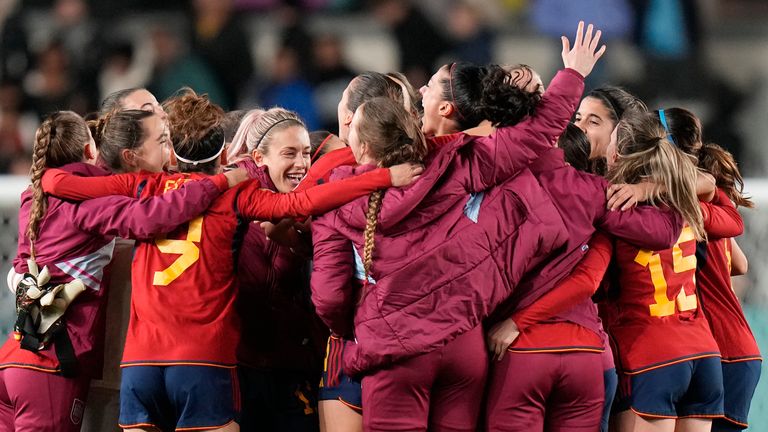
Spain’s triumphant Women’s World Cup team has made the decision to put an end to their boycott of the national squad, following substantial assurances of reform from Spain’s football federation (RFEF).
The breakthrough occurred after more than seven hours of discussions held at a hotel near Valencia, involving players, RFEF officials, the National Sports Council (CSD), and the women’s players’ union, FUTPRO.
As part of the agreement reached, between six to nine high-ranking RFEF officials will either step down or face dismissal. The names of departing RFEF officials were decided during a lengthy meeting that concluded early on Wednesday, with some of these names proposed by the players themselves.
The players had been boycotting the national team to demand broader reforms within the RFEF. This movement gained momentum following an incident where former RFEF president Luis Rubiales kissed Jenni Hermoso during the World Cup presentation ceremony.
A joint commission, comprising representatives from the RFEF, CSD, and players, will be established to oversee the agreed-upon changes.
In a symbolic move towards gender equality, the RFEF has removed the term “female” from the women’s national team’s official branding, aligning it with the men’s squad. Both teams will now be referred to as the “Spanish national football team.”
While the specifics of other reforms have not yet been made public, the RFEF has issued a statement pledging to provide the players with a ‘safe environment.’
Earlier this week, players who had been primarily selected for upcoming games declared their intention to make the “best decision” for their future and health. They also raised concerns about the call-up process, alleging that it did not adhere to FIFA’s regulations.
Initially, twenty players boycotted the team, but all reported for training on Tuesday. However, two players, Mapi Leon and Patri Guijarro, chose to leave the squad, citing their mental readiness and the need to witness a process of change.