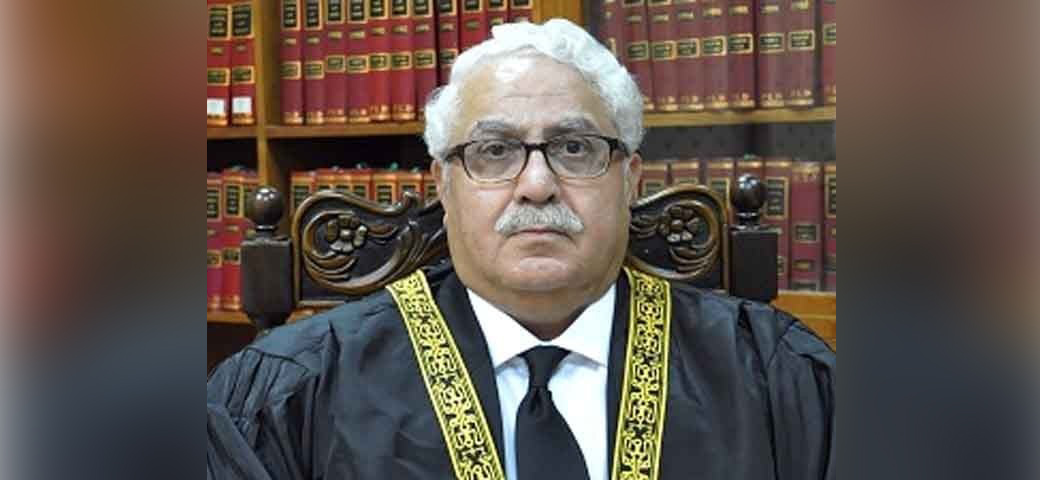
The Supreme Judicial Council (SJC) has reportedly issued a show-cause notice to Justice Sayyed Mazahar Ali Akbar Naqvi in response to complaints lodged against him.
Sources revealed that the notice was served following a meeting of the SJC chaired by Chief Justice of Pakistan Qazi Faez Isa. Comprising Chief Justice Isa, Justice Tariq Masood, and Justice Ijaz Ul Ahsan, the SJC has requested Justice Naqvi to submit his response by November 10.
Chief Justice Isa had called for the SJC assembly a day prior to address complaints registered against judges of superior courts.
This recent assembly marked the first SJC meeting under Chief Justice Isa’s leadership after a lapse of over three years.
The SJC, a constitutional forum vested with the authority to address various charges against judges of superior courts, including their removal, has reportedly received complaints against other judges of the superior court. However, it remains unclear whether notices or actions against these judges were deliberated upon during the meeting.
In September this year, Justice Masood, a senior judge of the Supreme Court and a member of the SJC, presented his legal opinion on the misconduct complaints filed against Justice Naqvi, as reported by The News.
Numerous misconduct complaints were lodged against Justice Naqvi during the tenure of former Chief Justice Umar Ata Bandial. Justice (retd) Bandial had referred the matter to Justice Masood for examination and legal assessment.
Initially, a misconduct complaint against Justice Naqvi was filed with the SJC by Lahore-based lawyer Muhammad Dawood. Subsequently, Pakistan Bar Council (PBC) Vice Chairman Haroon Rashid filed a misconduct complaint against the Supreme Court judge following the emergence of leaked audio purportedly featuring a discussion about the manipulation of a case before a specific bench or judge involving former Punjab Chief Minister Pervaiz Elahi.
Comprising five members, including the Chief Justice of Pakistan, the two senior-most judges of the Supreme Court, and the two most senior chief justices of high courts, the SJC serves as a crucial forum for ensuring accountability within the judiciary and among top government officials.