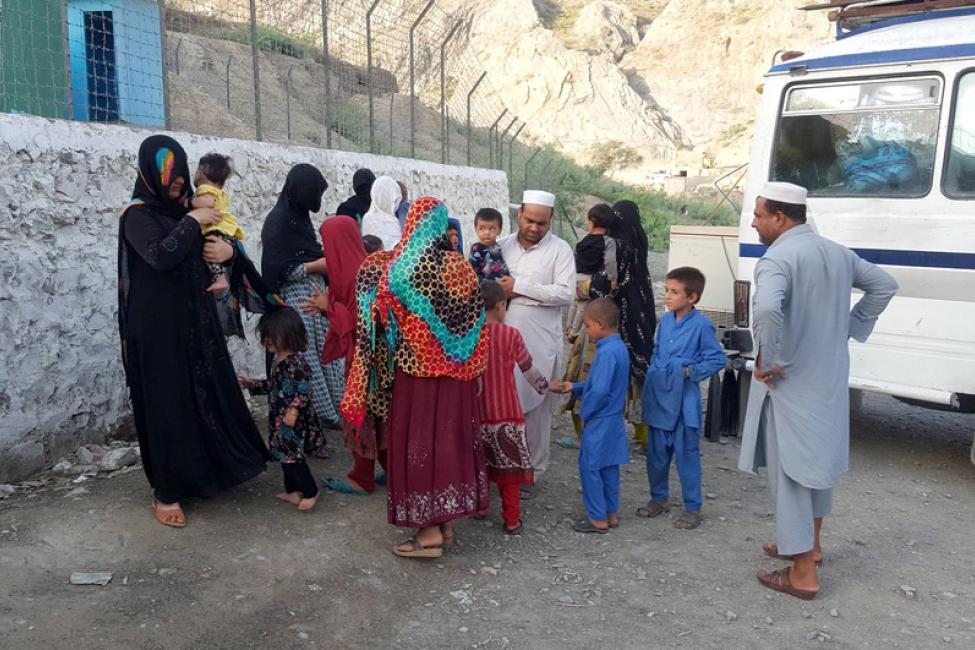
The United Nations High Commissioner for Refugees (UNHCR) and the International Organization for Migration (IOM) have announced their readiness to provide support in registering and managing Afghan nationals amidst Pakistan’s government crackdown on illegal immigrants.
This statement follows the recent ultimatum issued by the Pakistani government, which required all undocumented immigrants, including Afghan nationals, to leave Pakistan by October 31. Failure to comply with this deadline may result in imprisonment and deportation to their respective countries.
The decision to enforce stricter immigration measures was made during an apex committee meeting, chaired by Prime Minister Anwaarul Haq Kakar and attended by Chief of Army Staff (COAS) General Asim Munir, among others. The committee also stipulated that movement across the border would require passports and visas, with electronic Afghan identity cards (e-tazkiras) being accepted only until October 31.
Following the deadline, authorities will launch an operation targeting illegal properties and businesses owned by immigrants or in collaboration with Pakistani nationals.
In response to these developments, Afghan authorities, including the Afghan Taliban, have expressed concerns and objections, urging a reconsideration of the policy.
In their joint statement, the UNHCR and IOM emphasized their longstanding collaboration with Pakistan and their willingness to “provide support in developing a comprehensive and sustainable mechanism to register and manage Afghan nationals, including those who may be in need of international protection.”
The organizations also appealed to Pakistan to continue safeguarding vulnerable Afghans who have sought safety in the country and may face imminent risks if forced to return. They called on all countries to suspend forcible returns of Afghan nationals and ensure that any possible returns occur in a safe, dignified, and voluntary manner.
Highlighting Afghanistan’s severe humanitarian crisis and significant human rights challenges, particularly for women and girls, the UN agencies underscored the potential for severe human rights violations, including family separation and the deportation of minors, if forced repatriation takes place.
While acknowledging Pakistan’s hospitality toward Afghan nationals for over four decades, the UNHCR and IOM reiterated the call for all returns to be voluntary, safe, and dignified, without any pressure, to ensure protection for those seeking safety.
Despite criticism and calls for reconsideration from international organizations, Pakistan’s government has remained firm on its repatriation plan, asserting that it is in line with international practice. The government has also called on international humanitarian agencies to assist with the repatriation process.