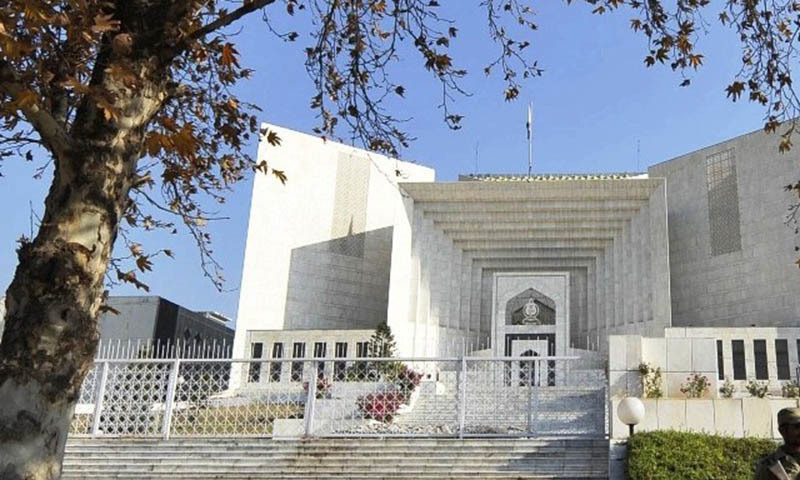
The Supreme Court was apprised by the federal government about the establishment of a fact-finding committee tasked with investigating the actions and directives of all relevant officials involved in managing and handling the Faizabad sit-in, as indicated in the implementation report submitted by Attorney General Mansoor Usman Awan.
According to the report, the committee, formed in accordance with the Supreme Court’s decision dated February 6, 2019, has been assigned the responsibility of identifying those responsible for the 2017 sit-in.
During the last hearing on September 28, a three-member bench led by Chief Justice of Pakistan (CJP) Qazi Faez Isa, while addressing review petitions against the verdict on the Faizabad sit-in staged by the TLP in 2017, expressed displeasure over the prolonged non-compliance of the order and instructed all parties to submit their written responses by October 27.
The Election Commission of Pakistan (ECP) also submitted an implementation report to the SC, asserting that the TLP was not involved in any terrorist activity and was not proscribed.
The fact-finding committee, composed of senior officials from the interior and defence ministries and the Inter-Services Intelligence (ISI), is mandated to collect evidence related to the Faizabad sit-in, examine all pertinent evidence, documents, and records, record witness statements, assess the issue based on applicable laws, regulations, and policies, and submit a comprehensive report with recommendations.
The committee is tasked with determining the individuals who issued orders and managed the Faizabad sit-in, with a report submission deadline set for December 1. If the committee requires additional time, it will seek an extension from the defence ministry.
The implementation report informed the SC that the committee had already convened its initial meeting on October 26, adhering to the specified terms of reference (TORs).
The legal proceedings stem from the 2017 Faizabad sit-in case, which was initiated when the then-federal government, along with various entities, filed review petitions challenging the Supreme Court’s judgment on the Faizabad sit-in.
In its earlier ruling on February 6, 2019, the Supreme Court emphasized the right to assemble and protest peacefully, provided that such activities abide by the law and do not infringe on the rights of others. The court also highlighted the need for a firm approach in dealing with those who issue edicts or fatwas to harm others or put them at risk. The sit-in was organized in November 2017 in response to a change in the finality-of-Prophethood oath, which was later clarified by the government as a clerical error during the passage of the Elections Act 2017.