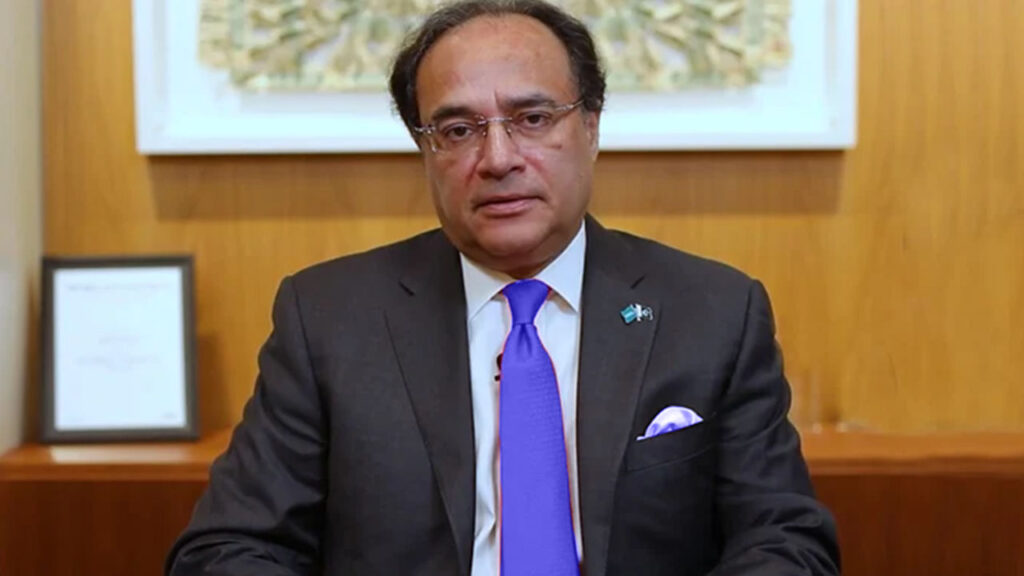
Finance Minister Muhammad Aurangzeb announced on Saturday that Pakistan has secured a $7 billion aid package deal with the International Monetary Fund (IMF), a crucial step toward achieving macroeconomic stability.
The international lender revealed this development late last night, providing much-needed respite for the nation. The new programme, pending approval by the IMF’s Executive Board, aims to cement macroeconomic stability and foster stronger, more inclusive, and resilient growth. This latest bailout, delivered in the form of loans, follows the government’s commitment to implementing significant reforms, including broadening the country’s tax base.
Aurangzeb emphasized that the programme would aid Pakistan in achieving macroeconomic stability. “We need to ensure structural reforms and bring self-sustainability in areas of public finance, energy, and state-owned institutions,” he stated, according to Geo News.
Pakistan’s economy has been on the brink due to chronic mismanagement, compounded by the Covid-19 pandemic, the effects of the war in Ukraine, supply chain disruptions that fueled inflation, and record flooding that affected a third of the country in 2022. With foreign currency reserves dwindling, Pakistan faced a debt crisis and turned to the IMF for an emergency loan in the summer of 2023.
In an IMF statement issued earlier today, mission chief Nathan Proter highlighted that the new programme “aims to capitalize on the hard-won macroeconomic stability achieved over the past year.” The programme will focus on strengthening public finances, reducing inflation, rebuilding external buffers, and eliminating economic distortions to promote private sector-led growth.
The authorities plan to increase tax revenues by 1.5% of GDP in FY25 and 3% of GDP over the programme duration. This will be achieved through simpler and fairer direct and indirect taxation, including integrating net income from the retail, export, and agriculture sectors into the tax system.
Federal and provincial governments have agreed to a ‘National Fiscal Pact’ to rebalance spending in line with the 18th Constitution Amendment. This includes devolving responsibilities for education, health, social protection, and regional public infrastructure to the provinces. By January 1, 2025, the provinces will harmonize their Agriculture Income Tax regimes with federal and corporate income tax regimes.
The government will enhance the power sector’s viability by timely tariff adjustments, implementing reforms, and avoiding unnecessary expansion of generation capacity. Targeted subsidy reforms will replace cross-subsidies to households with direct BISP support.
Efforts to improve the operations and management of state-owned enterprises (SOEs) and prioritization of the most profitable entities for privatization are underway. The government plans to phase out incentives for Special Economic Zones, agricultural support prices, and related subsidies. Additionally, it commits to advancing anti-corruption, governance, and transparency reforms, and gradually liberalizing trade policy.