
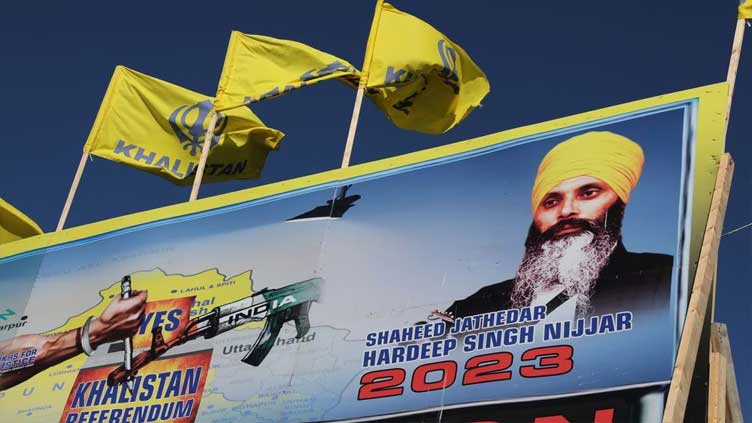
India’s Foreign Minister, Subrahmanyam Jaishankar, confirmed on Tuesday that India has communicated its readiness to consider any “specific” or “relevant” information provided by Canada pertaining to the killing of Sikh separatist Hardeep Singh Nijjar.
The development comes after Canadian Prime Minister Justin Trudeau’s recent statement asserting that Ottawa possessed credible intelligence linking Indian agents to the murder. This assertion initially provoked a strong reaction from New Delhi, which vehemently denied the allegations.
During a Council on Foreign Relations event in New York, Jaishankar provided insights into India’s diplomatic response to the allegations. He outlined the following points:
“One, we told the Canadians that this is not the government of India’s policy,” he stated. “Two, we told the Canadians that if you have something specific, if you have something relevant, you know, let us know—we are open to looking at it.”
In response to the claims, India took actions such as suspending new visas for Canadians and requesting Ottawa to reduce its diplomatic presence in the country. These measures were attributed to what India characterized as a deteriorating security environment.
Jaishankar also pointed out that India had been pressing Canada regarding its claims that organized criminals, including separatists like Nijjar, were based there. India had submitted “a large number of extradition requests,” he noted. He emphasized that it was essential to understand the context and highlighted that Canada had witnessed a surge in organized crime, violence, extremism, and secessionist forces in recent years.
Furthermore, allies of Canada, including the United States, have expressed cautious concern over the claims and urged India to cooperate with Canada’s investigation. The U.S. Ambassador to Canada mentioned that some information related to the case had been gathered by the Five Eyes intelligence alliance, which comprises the U.S., Canada, Australia, New Zealand, and the UK.


18 Comments