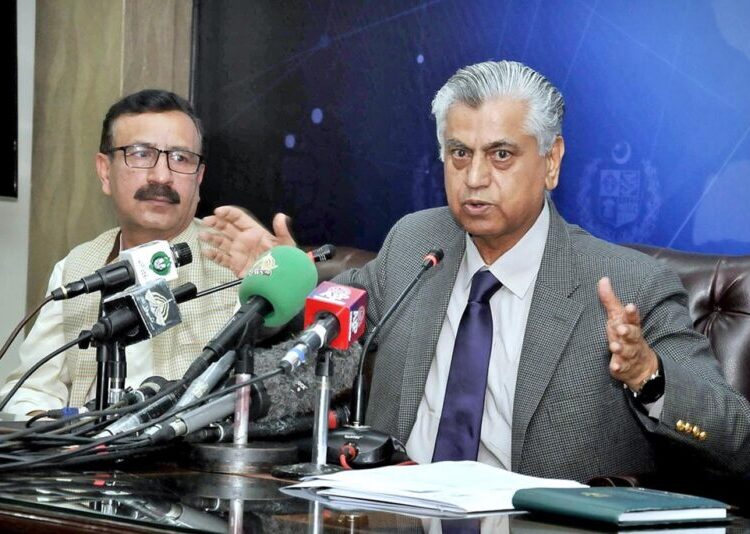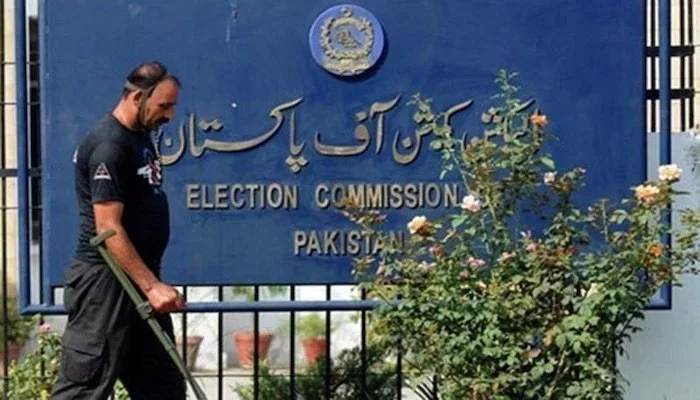
The Election Commission of Pakistan (ECP) has amassed 1,324 objections regarding the preliminary delimitation of constituencies, setting the stage for hearings commencing on November 1, 2023.
The ECP extended the objection filing deadline to October 27 for the convenience of the public.
These objections originate from various regions, with 672 submitted in Punjab, 228 in Sindh, 293 in Khyber Pakhtunkhwa, 124 in Balochistan, and seven in Islamabad. The ECP has established two benches for the hearings.
The first bench will address objections related to districts including Islamabad, Shikarpur, Jacobabad, Kashmore, Sialkot, Khuzdar, and Rajapur, while the second bench will handle objections concerning Kurram, Khyber, Nankana Sahib, Attock, Jhelum, Kohat, and Korangi.
On November 2, the first bench will hear objections regarding Malir, Sanghar, Swat, Haripur, Chakwal, and Pishin, while the second bench will address issues related to Mardan, Karachi East, Musa Khel, Lodhran, Noshero Feroz, Hub, Lasbela, and Awaran.
These proceedings hold significance as they could potentially impact the timeline for the forthcoming general elections in Pakistan. Delays in constituency delimitation and subsequent election preparations have raised concerns about possible delays beyond January.
The political landscape has been marked by uncertainty since the removal of the Imran Khan government through a no-confidence motion in April 2022. A coalition government assumed power and dissolved the National Assembly on August 9, setting the stage for upcoming elections.
While the ECP was initially required to conduct elections within a 90-day period following the dissolution of assemblies, the need for fresh constituency boundaries due to the recently approved census led to a delay. As a result, elections are now expected to take place in the last week of January.
The ECP released a provisional report on constituency delimitation based on the census data in September, signaling progress toward the highly anticipated general elections.