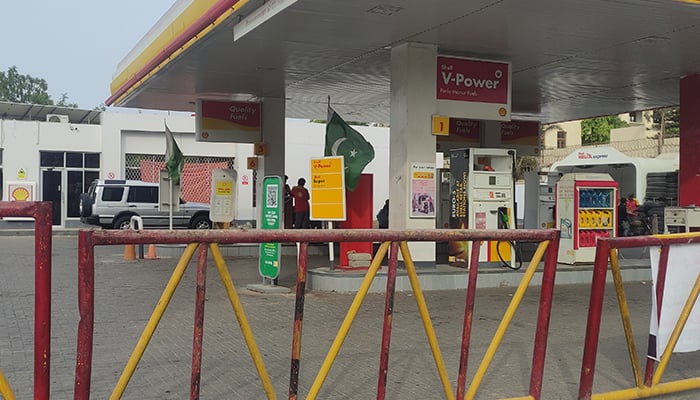
Petrol pumps across Pakistan observed a partial strike on Friday as the petroleum dealers remained divided over the call for a strike against the 0.5% turnover tax imposed in the federal budget for 2024-25.
Abdul Sami Khan, Chairman of the Pakistan Petroleum Dealers Association (PPDA), announced that petrol pumps would shut down on Friday. However, a faction of the association’s leaders chose not to support the strike, opting for another round of talks with authorities before considering an indefinite strike.
PPDA Secretary General Noman Ali Butt dismissed the report of a nationwide strike, stating that the supply of petroleum products would continue as usual. “The dealers’ association did not announce a strike; just a few elements gave the strike call. Talks with the government are underway, and the authorities have assured us that our grievances will be addressed,” he said.
Conversely, PPDA Spokesperson Hasan Shah urged caution, stating, “We have protested in the past as well. We have also blocked D-Chowk and Faizabad Interchange. We have protested outside the National Assembly and Senate. However, negotiations are still the best option, and strikes should be the last resort.”
In Karachi, many petrol pumps remained closed on Friday morning, but some continued operations, particularly on University Road and Sharea Faisal. In contrast, fuel stations in Lahore did not observe the strike, with the Petroleum Dealers Association Punjab deciding to keep pumps open despite unsuccessful negotiations with the government. Petrol pump owners in Lodhran also continued selling fuel, distancing themselves from the strike.
The Oil & Gas Regulatory Authority (Ogra) and the Petroleum Division assured that petroleum products would remain available nationwide, noting that there are sufficient supplies. “The concerns of the PPDA have also been taken up with the FBR and Finance Division for consideration,” they said on Thursday.
In a joint statement, they announced that all Oil Marketing Companies (OMCs) had been advised to ensure adequate supplies of petroleum products at petrol pumps and to keep them open. They also established a monitoring cell in the DG (Oil) office to oversee the fuel supply situation and coordinate with stakeholders during the strike call. OGRA mobilized its monitoring teams to monitor the situation and take necessary actions.
Provincial chief secretaries have been requested to take appropriate measures to keep the maximum number of retail outlets open and to allow oil tankers to move during the day to replenish stocks at open retail sites.