Bulls dominated the Pakistan Stock Exchange (PSX) on Friday as the KSE-100 index soared by more than 1,800 points, reaching a record high in intraday trading. This surge comes amid growing investor confidence fueled by recent economic measures, including a significant reduction in power tariffs.
By 9:59 AM, the benchmark KSE-100 index had gained 1,855.30 points, or 1.56%, climbing to 120,793.41 from the previous close of 118,938.11. This milestone was achieved despite volatility in global markets, reflecting strong local investor sentiment.
Market Sentiment Boosted by Power Tariff Cuts
According to Mohammed Sohail, CEO of Topline Securities, the index’s breakthrough past the 120,000 mark was driven by expectations of improved corporate earnings following the government’s decision to cut power rates and address the circular debt issue.
Similarly, Yousuf M. Farooq, Director of Research at Chase Securities, noted that the market largely ignored the negative impact of US-imposed tariffs and instead celebrated the decline in electricity prices. He explained that falling crude and coal prices further lifted market sentiment, easing inflationary concerns and raising hopes for lower interest rates in the future.
PM Shehbaz Hails Historic Market Surge
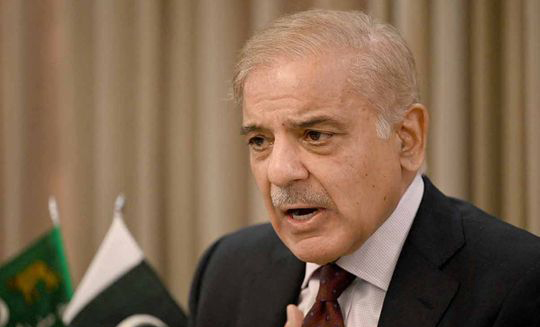
Prime Minister Shehbaz Sharif expressed satisfaction over the record-breaking rally, highlighting it as a sign of increasing investor confidence in the government’s economic policies. He emphasized that the reduction in power tariffs—Rs7.41 per unit for residential consumers and Rs7.69 per unit for industries—would provide much-needed relief to businesses and households.
US Tariffs Raise Global Trade Concerns
Despite PSX’s record rally, global markets have been shaken by the sweeping tariffs imposed by US President Donald Trump. The United States announced a 29% tariff on imports from Pakistan, along with similar duties on dozens of other countries, triggering concerns of a global trade war.
Pakistan’s exports account for only 0.16% of total US imports, but the impact on Pakistan’s economy could be significant. The US remains Pakistan’s largest export market, purchasing goods worth $6 billion annually—18% of the country’s total exports. Key sectors such as textiles, leather, surgical goods, rice, cement, steel, and salt are expected to face headwinds due to the tariffs.
Global Markets React to Trade War Fears
International stock markets saw heavy losses as fears of a global economic slowdown intensified. The Dow Jones plummeted nearly 4%, the S&P 500 lost 5%, and the Nasdaq dropped almost 6%—marking the worst trading session since March 2020.
Major US corporations also suffered, with Nike’s stock plunging 14% and Apple shedding 9%, as analysts warned of rising production costs and a potential recession. Economic experts at JP Morgan raised the probability of a global recession to 60%, citing the tariffs’ impact on trade and consumer prices.
Oil Prices Fall as Tariff Uncertainty Grows
The tariff shock also sent crude oil prices tumbling. Brent crude fell to $69.38 per barrel, while US West Texas Intermediate (WTI) crude dropped to $66.13. Analysts attributed the decline to concerns that the trade war could weaken demand for oil, particularly in Asian economies that drive global consumption growth.
Outlook: PSX’s Upward Momentum vs. Global Uncertainty
While the PSX continues its bullish streak on the back of government policies, the broader global market remains under pressure due to escalating trade tensions. Analysts caution that while Pakistan’s domestic market may sustain gains in the short term, external economic risks, including the impact of US tariffs and potential inflationary pressures, could influence long-term investor sentiment.