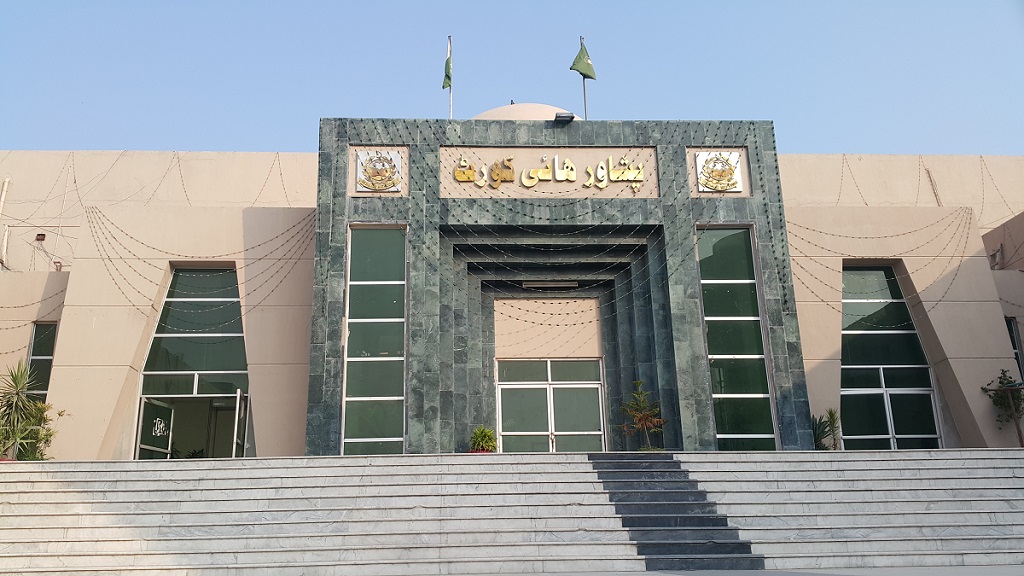
The Peshawar High Court (PHC) has reached a decision concerning the writ petitions filed in response to the provincial government’s choice to retake the Medical and Dental College Admission Test (MDCAT).
A two-member bench, comprising Justice Abdul Shakur and Justice Arshad Ali, announced this decision on Tuesday, with a detailed verdict to be released later.
The MDCAT 2023 examinations, conducted on September 10 in 31 cities nationwide, were marred by allegations of “mass cheating.” In response, the PHC had issued a stay order to halt the release of test results. Subsequently, the Khyber-Pakhtunkhwa provincial cabinet decided to organize a fresh MDCAT.
During Tuesday’s hearing, Justice Syed Arshad Ali questioned why the Pakistan Medical and Dental Council (PMDC) had not initiated its own inquiry upon receiving a letter from the Joint Investigation Team (JIT). He criticized the PMDC for failing to act when their intervention was necessary.
Advocate General Amir, Khyber Medical University lawyer Abdul Muneem Khan, PMDC lawyer Yasir Khattak, and other legal representatives appeared before the court.
The advocate general informed the court that the provincial government, with cabinet approval, had opted to conduct the test again due to irregularities in the September 10 examination. He also noted ongoing communication between the government and Khyber Medical University (KMU) regarding this matter.
The advocate general highlighted that the JIT’s report, prepared by Additional Chief Secretary Home Abid Majeed, addressed significant issues and provided recommendations to prevent similar incidents in the future. He assured the court that strict actions would be taken against those involved in illegal activities, given the students’ future is at stake.
KMU’s lawyer, Abdul Muneem, clarified that KMU possesses the authority to conduct tests and follows its set of rules, with regular communication with PMDC in accordance with PMDC law.
On the contrary, PMDC’s lawyer argued against retaking the test under any circumstances.
The petitioner’s counsel, Yasir Khattak Advocate, contended that retaking the test would unfairly penalize diligent students who had performed well. He requested the court to outline the procedure and ensure the protection of high-achieving students.
Meanwhile, parents of the students attending the court hearing, who identified as belonging to the lower socioeconomic class, expressed concerns about the complete test cancellation. They proposed identifying and penalizing individuals who had obtained marks through unfair means instead of nullifying the entire examination.
Lawyers present at the hearing pointed out past instances of exam cheating and advocated for action against the culprits rather than test cancellation.
Justice Syed Arshad Ali criticized both KMU and PMDC for their unprofessional approach and questioned why they did not take proactive measures when inquiries were initiated.
PMDC’s lawyer stated that the test had been validated during a meeting of vice-chancellors on September 15, and action had been recommended against those involved.
Justice Arshad Ali raised the question of why PMDC had not conducted its own inquiry when it had volunteered to be part of the JIT.
In a concise ruling, the court stated that the provincial government had decided to conduct the MDCAT test again, leading to the disposal of the writ petitions.