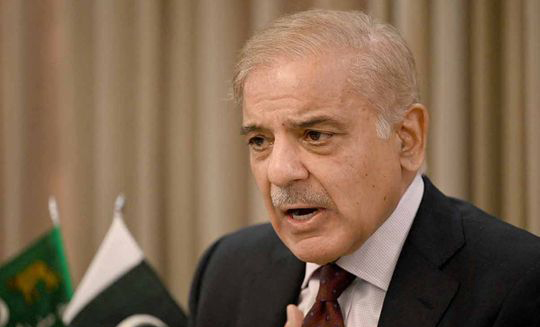
Prime Minister Shehbaz Sharif has directed the establishment of a dedicated anti-riot force to tackle violent protests in the future, following a government crackdown on Pakistan Tehreek-e-Insaf (PTI) protesters in Islamabad earlier this week.
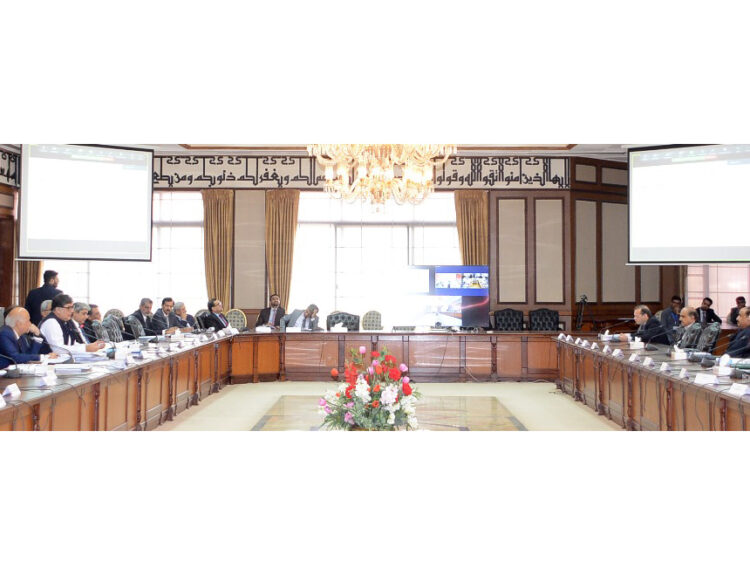
Chairing a meeting on law and order, the premier emphasized the need for a well-trained force equipped with modern tools to address public unrest effectively. “There is a dire need for a professional anti-riot force to handle mobs and ensure public safety,” the prime minister stated, citing examples of similar forces in other countries.
During the federal cabinet meeting, a minister suggested imposing governor’s rule in Khyber Pakhtunkhwa (KP) to counter repeated protests led by KP Chief Minister Ali Amin Gandapur. The suggestion stemmed from concerns over the alleged misuse of state resources for political demonstrations. However, the proposal did not gain majority support, leaving the matter undecided.
The prime minister paid tribute to security personnel who lost their lives during the PTI protests. He condemned the violence and property damage caused by the demonstrators and called for strict legal action against those responsible. “Attempts to destabilize the country for personal political gains will not be tolerated,” he said.
Separately, addressing the 26th National Security Workshop at the National Defence University, PM Shehbaz outlined his government’s plans to revive Pakistan’s economy and emphasized the link between economic and national security. He highlighted the government’s focus on privatizing state-owned entities, boosting exports, and reducing debt to ensure sustainable growth.
The prime minister also hailed the Pakistan Stock Exchange’s record-breaking performance, crossing the 100,000-point mark, attributing it to collaborative efforts between the government and stakeholders.
PM Shehbaz welcomed the ceasefire between Israel and Lebanon, expressing hope for lasting peace in the region. He also extended condolences to Malaysia over the destruction caused by recent floods, reiterating Pakistan’s solidarity with its brotherly nation.
The prime minister acknowledged Pakistan’s ongoing challenges, including terrorism, circular debt, and tax evasion. He resolved to address these issues through comprehensive strategies and a “homegrown plan” to transform the nation’s economic landscape.