The political scenario in Pakistan witnesses a shift as the Pakistan Muslim League-Nawaz (PML-N) takes the lead in a six-party alliance, holding 108 seats so far in the National Assembly, according to the parliamentary team of PakProfile.com
With their 79 and 54 NA seats respectively, the PML-N and the PPP agreed to join hands to form a coalition government along with other political parties including Muttahida Qaumi Movement-Pakistan (MQM-P), Istehkam-e-Pakistan Party (IPP), Pakistan Muslim League-Quaid (PML-Q) and Balochistan Awami Party (BAP) for a coalition government.
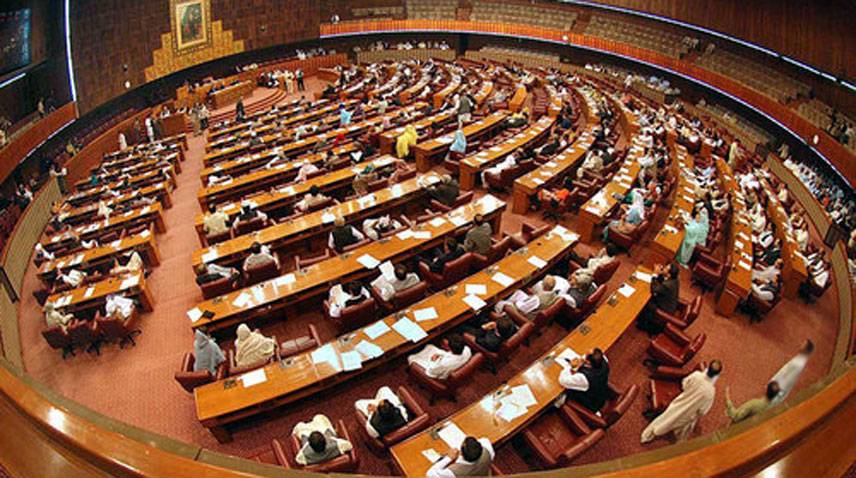
In the 336-member National Assembly (NA), 169 votes are the magic number for the formation of a government, and around 224 are needed for a two-thirds majority. The six-party alliance has 207 seats in the National Assembly so far.
The Pakistan Muslim League-Nawaz (PML-N) has emerged as the largest parliamentary party, boasting 108 members, including 20 reserved seats for women and four for minorities. Initially securing 75 seats in the National Assembly (NA), the party’s tally rose to 84 after nine independent members joined its ranks. With the additional allocation of reserved seats, the PML-N’s total strength now stands at 108 members in the house.
On the other hand, the Pakistan Peoples Party (PPP) holds 54 elected seats, augmented by 12 reserved seats for women and two for minorities, bringing its total strength in the National Assembly to 68 members.
Combining the numbers of PML-N and PPP MNAs yields a total of 169, aligning with the “magic number” required for government formation, as both parties collectively hold 168 seats.
Meanwhile, the Muttahida Qaumi Movement-Pakistan (MQM-P) commands 17 MNAs, bolstered by four reserved seats for women and one for minorities, elevating its total strength to 22 members in the NA. Conversely, the Pakistan Muslim League-Quaid (PML-Q) clinched three seats, with an independent member joining its ranks, and an additional reserved seat for women, culminating in a total of five members in the NA.
Of the 99 independent candidates securing seats in the lower house, 81 affiliated with the Pakistan Tehreek-e-Insaf (PTI) have aligned with the Sunni Ittehad Council (SIC), while eight independent candidates opted to maintain their independent status.
The Jamiat Ulema-e-Islam Fazl (JUI-F) boasts six members, with two additional reserved seats for women, bringing its total strength to eight members in the assembly. Similarly, the Istehkam-e-Pakistan Party (IPP) holds three MNA members in the assembly.
Other political entities, including Majlis-e-Wahdat-e-Muslimeen Pakistan (MWM), Balochistan Awami Party (BAP), Balochistan National Party (BNP), National Party, Pakhtunkhwa Milli Awami Party, and Pakistan Muslim League-Zia, each command one seat in the lower house.