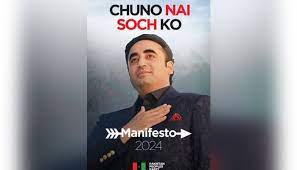
The Pakistan Peoples Party (PPP) has officially disclosed its extensive manifesto, titled “Chuno Nai Soch Ko” (Choose new thinking), outlining the party’s vision and commitments for the nation in the upcoming general elections on February 8.
Chairman Bilawal Bhutto-Zardari, through X (formerly Twitter), directed followers to a website for accessing the detailed document. In his post, he emphasized that the PPP stands as the sole party with a strategic plan to combat poverty, unemployment, and inflation.
The manifesto prominently addresses poverty alleviation and focuses on providing facilities for the working and lower classes. It articulates comprehensive plans for healthcare, education, food security, and women’s empowerment.
Key highlights from the PPP manifesto include a commitment to double the real incomes of wage earners through sustained growth, investments, and job creation. The party pledges an 8% annual increase in the minimum wage to reach a living wage.
Housing is viewed as a fundamental right by the PPP, and the manifesto promises homeownership for the most vulnerable, including the poor, landless, and working classes.
The “Bhook Mitao Programme” is introduced as a pivotal initiative, ensuring food security by making nutritious food affordable, boosting domestic production, subsidizing local producers, and engaging women in the market economy.
The PPP’s manifesto introduces the issuance of labor cards for the country’s labor class, providing benefits such as the payment of children’s school fees, health insurance, and old-age benefits.
For educated youth, the party plans to provide a stipend for one year through the Youth Card. Additionally, a Haari Kisan card will be issued to farmers, providing subsidies on fertilizers and crop insurance.
The 10-point agenda outlined in the manifesto includes doubling real income for wage earners, free solar energy for the poor, education projects, free health services nationwide, housing for flood affectees and the poor, expanded welfare schemes, a program for farmers, enhanced support for laborers, and initiatives for unemployed youth.