Interim Health Minister Dr. Nadeem Jan has revealed that a significant 90% of poliovirus cases in Pakistan have been “imported from Afghanistan.” This statement comes in the wake of two more positive poliovirus samples detected in the country, following the emergence of the third case this year.
According to officials at the polio laboratory of the National Institute of Health (NIH), sewage samples from Dera Bugti in Balochistan and Peshawar have tested positive for the virus. Both strains found in these sewage samples closely resemble Afghanistan’s poliovirus.
Currently, Pakistan and Afghanistan are the only two countries where the polio virus remains endemic. Authorities report that the transmission of the wild poliovirus is limited to seven districts in the southern region of Khyber Pakhtunkhwa, including Tank, Bannu, North Waziristan, South Waziristan Upper, South Waziristan Lower, Dera Ismail Khan, and Lakki Marwat.
A World Health Organization report released in August revealed that since January 2021, all reported polio cases in Pakistan originated from these seven polio-endemic districts in southern Khyber Pakhtunkhwa.
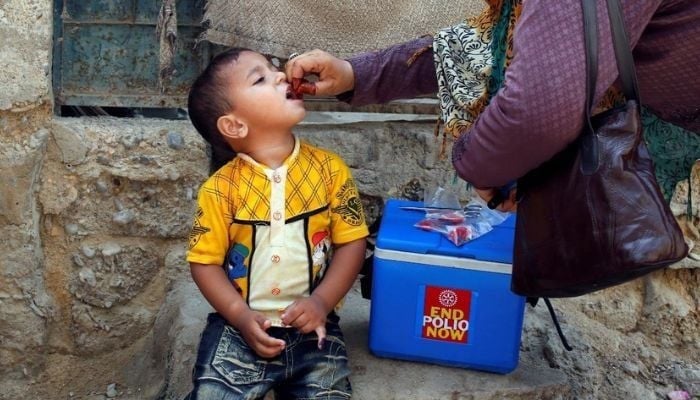
This week, Pakistan’s total polio cases for the year increased to five following new cases reported in Peshawar, Bannu, and Balochistan’s Dera Bugti. In response to the growing crisis, the government has launched a five-day polio vaccination drive targeting approximately 44 million children nationwide. About 350,000 polio workers will participate in the campaign to administer anti-polio vaccine drops to children aged 0-5 years.
Speaking about the surge in polio cases during an interview on a private T channel, Health Minister Dr. Nadeem Jan stated, “Our surveillance is optimal. Of the 34 samples that we have received, 90% have come from Afghanistan… our own are even less than 10%.”
Dr. Jan highlighted the danger posed by imported cases and stressed the critical need for vaccination to prevent the virus from becoming endemic in Pakistan.
Dr. Jan also discussed the government’s efforts to combat the sale of fake medicines. He mentioned the development of a system for checking barcodes on medicines but noted challenges in its implementation. The Drug Regulatory Authority of Pakistan and the Health Department are working to prevent the sale of counterfeit medicines, with crackdowns on malpractices already underway.
Regarding the return of former Prime Minister Nawaz Sharif, scheduled for October 21, Dr. Jan emphasized that it was a political matter, and the government would adhere to the law and the Constitution in handling the situation.